Hello World!
“Almost every problem that you come across is befuddled with all kinds of extraneous data … if you can bring this problem down into the main issues, you can see more clearly what you are trying to do and perhaps find a solution” — Claude Shannon
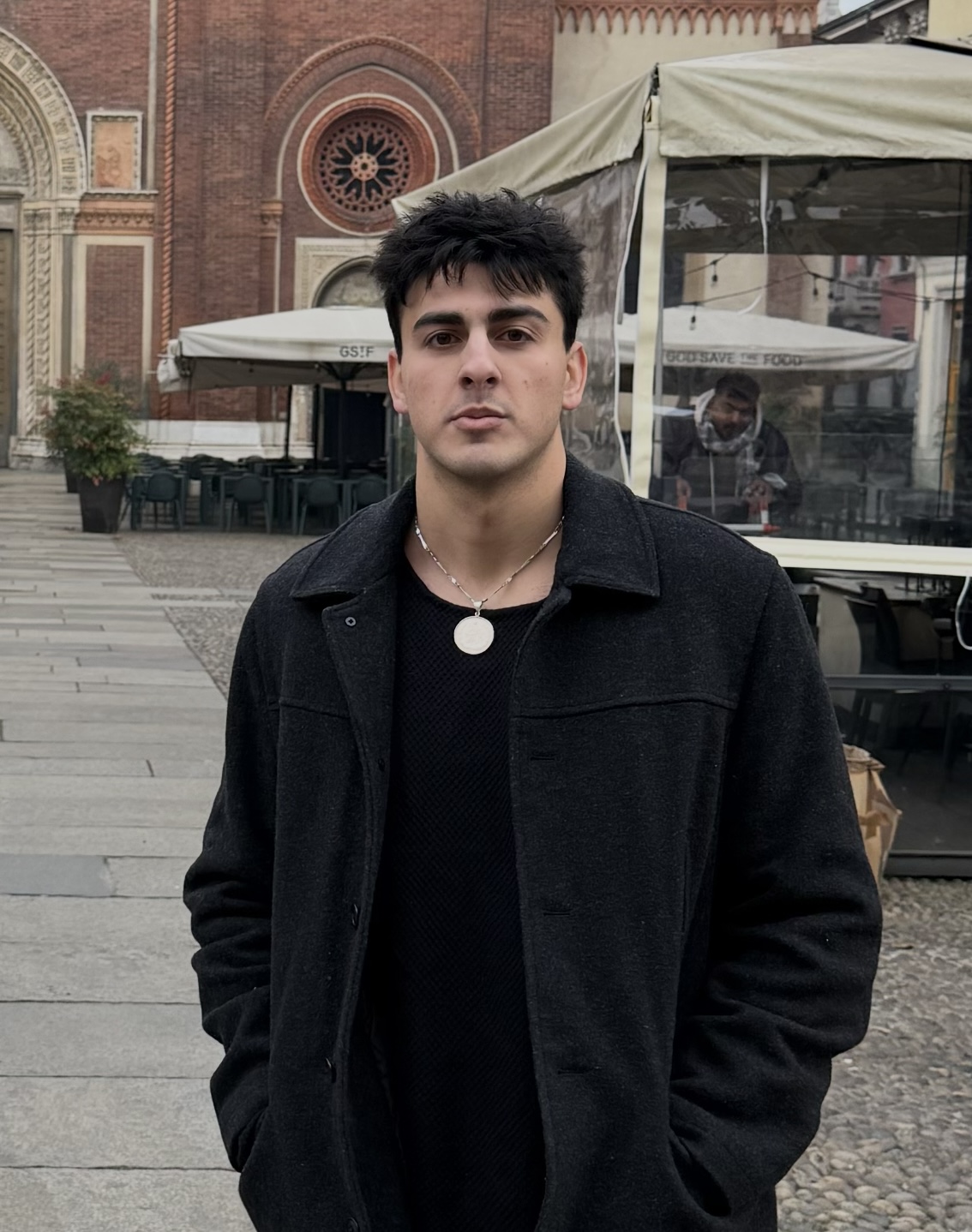
About. I am a Ph.D. candidate, beginning Fall 2026, in Computer Science at the University of Washington, advised by Dr. Siddhartha Srinivasa. In parallel, I intern at BRINC Drones, where I am developing an end-to-end autonomy pipeline for their indoor drone system. I recently completed my M.S. at the University of Pennsylvania (GRASP Lab), where I was advised by Dr. George Pappas, and previously completed my B.S. in Mechanical Engineering at UCLA, with additional internship experience at Blue Origin and NASA JPL.
Why Robotics. I’ve always been fascinated by how living systems solve problems. Slime molds (a single-celled organism), for instance, can find shortest paths to food via simple chemical signals; ants are able to build and organize complex societies from limited individual capability; and plants, despite lacking a nervous system entirely, still adapt beautifully and arguably more effectively than anything else on Earth.
This universal dialogue of feedback between agent and environment is what draws me to robotics. I’m interested in how agents learn, decide, and adapt under constraints, and how these behaviors can scale to solve problems that affect human and planetary flourishing.
Technical Interests. I work across the stack, with a focus on autonomy at the intersection of learning and control:
- Optimal control & reinforcement learning
- Learning-based control under uncertainty
- Multi-agent systems
- Dexterous manipulation
- Robustness & generalization